
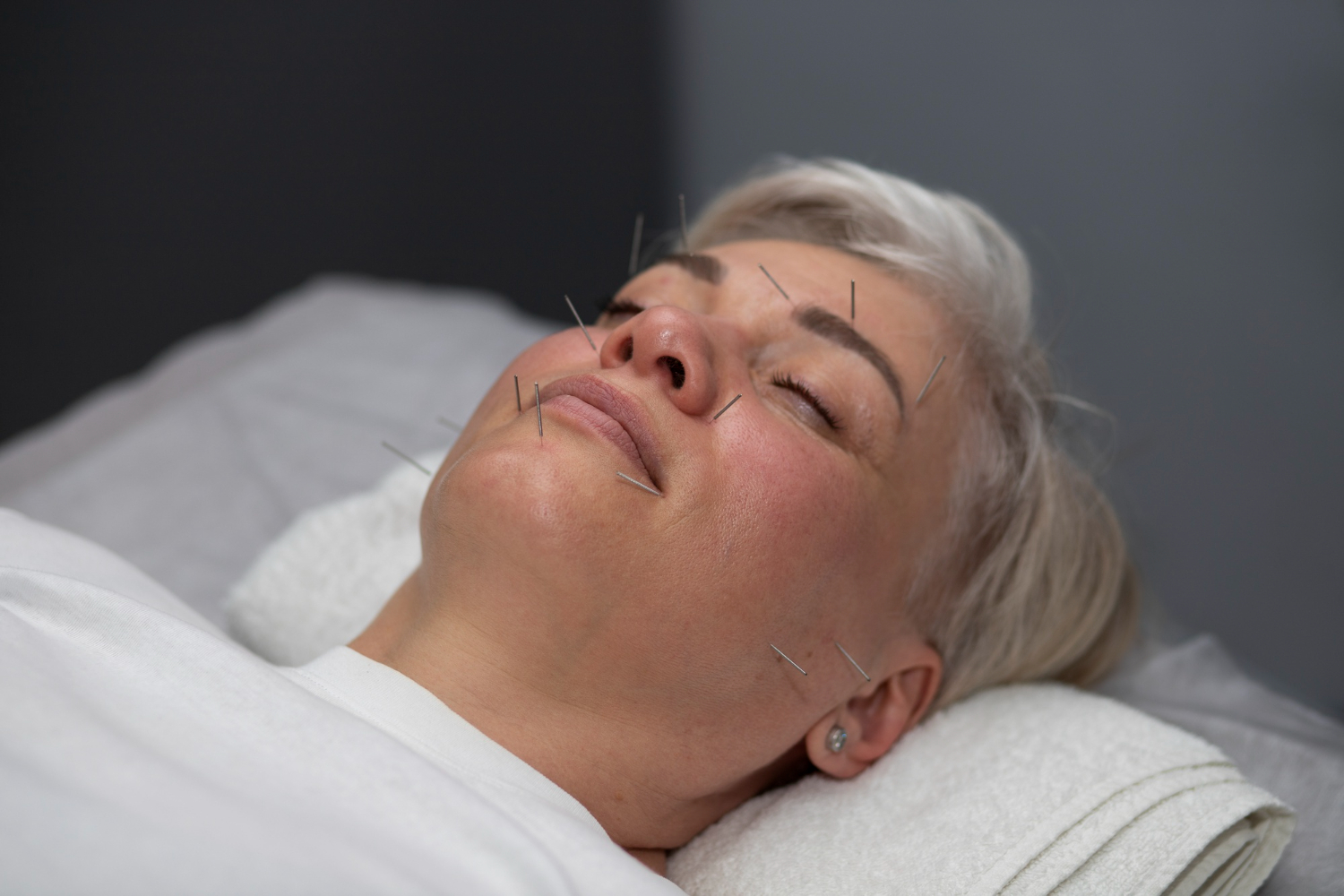
Have you ever left a healthcare professional’s office feeling amazing?
I bet most of the time you don’t.
Well, that is what happens always, or almost always, when you leave an acupuncture office. If you have had acupuncture, you know exactly what I’m talking about: that amazing relaxation, a deep sense of calm, or sometimes even a boost of energy.
I sure love acupuncture! And you might think that I’m biased because that’s what I do, but I loved it even before I started practicing it.
So why do we get that deep state of relaxation after an acupuncture treatment? That is because acupuncture stimulates the Autonomic Nervous System (ANS). This system is responsible for involuntary functions we’re not consciously aware of, such as heart rate, blood pressure, respiration, and digestion.
The ANS consists of two main branches: the sympathetic and the parasympathetic nervous systems. You may have heard of being in “fight or flight” mode; that’s the sympathetic nervous system at work. It tells us to be alert, to run, to act when we’re in danger. This response was incredibly helpful when humans were being chased by large animals in the past… but we’re not anymore. Yet this system is still activated by stressors, and that is normal, but when it stays “on” for too long, problems begin.
The parasympathetic nervous system is the opposite. It’s the “rest and digest” part of the autonomic nervous system. Once a dangerous situation has passed, this system allows the body to calm down, relax, repair, and heal.
In our modern world, most of us aren’t being chased by tigers or lions — but we are under constant stress: traffic, work, picking up kids from school on time, poor lifestyle habits, excessive screen time, politics, or just life in general. All of this turns on the sympathetic nervous system, and for many people, it can stay activated for long periods of time.
The consequences?
Feeling wired but exhausted, difficulty falling or staying asleep, high blood pressure, heart disease, chronic inflammation, metabolic syndrome, type 2 diabetes, obesity, anxiety, and persistent fatigue.
Acupuncture helps stimulate the parasympathetic nervous system by activating the vagus nerve and effectively shuts down the fight-or-flight response. This can reduce heart rate and blood pressure, stimulate digestion, improve elimination, and decrease inflammation.
The results?
Feeling calmer, more balanced, grounded, and amazing.
Acupressure Points to Calm Your Nervous System
Many acupuncture points can help support your “rest and digest” response and gently calm the body when stress feels high. Here are 3 of them that you can stimulate at home using acupressure (gentle pressure or massage).
DU 20 (Bai Hui)
Located at the very top of the head, in the midline, where a line drawn from ear to ear meets the center of the head.
Calms the mind, reduces stress and overthinking, helps with headaches, and promotes mental clarity.
Gently massage or apply light pressure for 30–60 seconds while breathing slowly.
REN 12 (Zhong Wan)
Located in the abdomen, halfway between the bottom of the breastbone and the belly button.
It supports digestion, helps with bloating and abdominal discomfort, and strongly encourages a “rest and digest” state.
Massage gently (clockwise) for about a minute, especially during stress or after meals.
ST 36 (Zu San Li)
About four finger widths below the kneecap, outside of the shin bone.
It boosts energy, supports digestion and immunity, reduces fatigue, and builds overall resilience.
Massage firmly but comfortably for 1minute on each leg.
Acupressure can be very effective when used consistently. Acupuncture, however, provides more profound and longer-lasting nervous system regulation, especially for chronic stress, pain, or fatigue.
It’s incredible what your body can do when the nervous system is supported.
Schedule an appointment and start feeling better



0 Comments